


Custom Seat Covers - How to Choose & Compatability Guide

Choosing the right custom seat covers really comes down to two things: making sure we know exactly what vehicle and seats you have, and choosing the fabric that's right for you.
The first part is usually easy. Start with your vehicle's year, make, and model. In some cases, we may need to know a little more about your seats or ask about a specific feature to make sure we're using the correct pattern. In this article we will go in to detail what that journey might look like.
Once that's taken care of, the fun part starts: choosing your fabric. Whether you're looking for something durable for a work truck, comfortable for everyday driving, easy to clean, or simply want a new look for your interior, we'll help you understand what each one is best suited for.
Start With Your Year, Make & Model
The most important information we need is simple: your vehicle's year, make, and model.
For most vehicles, that's enough to get you started. We've already done the work of matching vehicles with the seat patterns and options available for them, so you don't need to know technical names or measurements before ordering.
In some cases, the same year, make, and model was available with more than one seat configuration. When that happens, we may ask you to identify your seat style or answer a specific question about your seats so we can determine which version you have. If you aren't asked any additional questions, you can skip the next few sections and go right to selecting your fabric.
Sometimes We Need One More Detail
Most customers won't need to spend much time identifying their seats. Occasionally, however, a vehicle manufacturer used multiple versions of a seat within the same year and model. When this happens, we may ask a simple question about a feature that helps us tell the seats apart. It could be something like whether your seat has a particular type of control, removable headrests, an armrest, a console, or a certain split configuration.
These questions only appear when the answer helps us identify which seat pattern your vehicle needs. If we don't need the information, we won't ask for it.
Identifying Your Seat Configuration
Bucket seats. Bench seats. 60/40s. 40/20/40s. There are plenty of terms used to describe vehicle seats, and some of them can sound confusing if you've never had to think about your seat configuration before.
These terms give us a general way to describe how your seats are arranged, but they don't determine the pattern by themselves.
For example, two trucks can both have a 40/20/40 front seat and still have completely different seat shapes, headrests, consoles, controls, and other features. We use patterns for specific vehicle seats and configurations rather than one generic "40/20/40" pattern.
The seat type helps us understand what you have. The individual vehicle pattern is what gives you the custom fit.
Look at the Details of Your Seats
Once you know the basic configuration, that may be enough to order your custom seat covers. But we may also have you take a closer look at the seats themselves.
Does the headrest come out, or is it built into the seat? Does the seat have manual adjustments or electronic controls? Are there armrests? Is there a center console? Does part of the seat fold forward? Are the seat belts mounted into the seat? Small differences like these can be important when determining which pattern your vehicle requires.
You don't necessarily need to know what every feature is called. Being able to identify what you see when we ask for it, or sending us a photo when you're unsure, is usually enough.
Why Are We Asking That Question?
Manufacturers sometimes offered more than one seat configuration within the same year, make, and model. Two seats can look very similar from across the vehicle while having a small difference that requires a different pattern. Those questions help us narrow down exactly which seats you have so we can make the correct covers for your vehicle.
Take Photos of Your Seats
If you're unsure about your seat configuration, a few good photos can often answer the question. The most useful photos aren't necessarily extreme close-ups. Step back far enough that we can see the entire seat and the features around it. If there's a particular feature you're unsure about, take an additional photo.
If you're having trouble identifying your seats or answering one of the questions during ordering, feel free to send us a few clear photos of the entire seat configuration. We've worked with thousands of different vehicle and seat combinations, and sometimes a feature that's difficult to describe is easy for us to recognize in a photo.
Getting the Right Fit Starts With the Right Information
Year, make, and model get us started. Your seat configuration, and a few specific details, help us determine exactly what you have. That's why we ask questions. They may seem like small details, but they're part of what allows us to make a seat cover for your seats instead of simply finding something that's close enough.
And if you don't know the answer, that's okay. Send us a few photos and let us help. We've spent decades learning the differences between vehicle seats so you don't have to.
Choosing the Right Fabric
Your vehicle tells us which patterns you need. How you use your vehicle can help determine which fabric is right for you. Someone protecting the seats of a work truck may have very different priorities from someone upgrading the interior of a daily driver or protecting a family vehicle.
Canvas is one of our more durable and practical choices. It's a great fit for work trucks, pets, outdoor activities, and vehicles that see a lot of everyday wear. If your main goal is adding a tough layer of protection between your original seats and whatever your day brings with it, Canvas is a good place to start.
Real Neoprene has a softer, more flexible feel with a sporty appearance. It's a popular choice for daily drivers, off-road vehicles, and active lifestyles where comfort and protection from everyday messes are both important. We use real neoprene rather than simply using the name to describe a neoprene-style fabric.
Leatherette is a good option when you want to change the appearance of your interior while still adding protection. It provides a clean, more upscale leather-like look and has a surface that's easy to wipe down, making it a popular choice for drivers who want a combination of appearance and easy maintenance. This fabric is considered water-proof.
Upholstery Fabrics provide a more traditional automotive interior look and feel. These materials are a good choice for everyday drivers who want their seat covers to feel more like part of the vehicle's original interior or to give it a classic look.
Saddle Blanket has a durable woven construction and a distinctive look that's especially well suited to trucks. It's a great option if you want something practical and rugged while adding more texture and character to the interior.
Genuine Sheepskin is our premium natural option with comfort as its biggest advantage. The soft wool creates a plush seating surface and helps provide comfort in both hot and cold conditions. It's an especially good choice for drivers who spend a lot of time behind the wheel and want to prioritize how their seats feel.
What About Heated & Cooled Seats?
Having heated or ventilated seats doesn't necessarily mean you can't protect them with custom seat covers. Seat heaters can generally still be used with our seat covers installed, although the additional layers of material between you and the original seat may affect how quickly you feel the heat.
Ventilated or cooled seats work by moving air through the seating surface, so adding a seat cover can reduce the amount of airflow you feel. Your choice of fabric can make a difference here. Fully waterproof materials, such as Leatherette, can block airflow through the seating surface, while a perforated material like our Quilted Leatherette allows more air to pass through.
If maintaining your factory seat ventilation is especially important to you, keep that in mind when choosing your seat cover material.
What About Seat Airbags?
Many modern vehicles have side-impact airbags built directly into the seats. You can often identify these seats by looking for an airbag or SRS tag along the outside edge of the seat.
For applicable seats, our custom covers use our Safe Stitch breakaway seam in the airbag deployment area. The seam is designed specifically for use with seats equipped with side-impact airbags.
Are Custom Seat Covers Right For You?
It's best to think about what your seats need protection from, how you use your vehicle, how much maintenance you want, the look you're going for, and how you want the seats to feel. Those questions can quickly narrow down which fabric makes the most sense for you. At the end of it all, any of our seat cover fabrics are made to add protection to your seats.

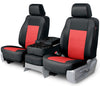


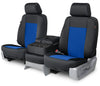




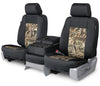


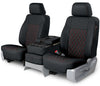


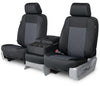


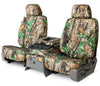


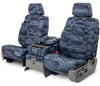

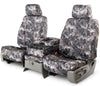

Custom-made seat covers are tailored to match your exact vehicle seats. They contour perfectly, providing a factory-fit look and preserving your original upholstery. Each cover is crafted with precision and made to order, ensuring quality, comfort, and style.